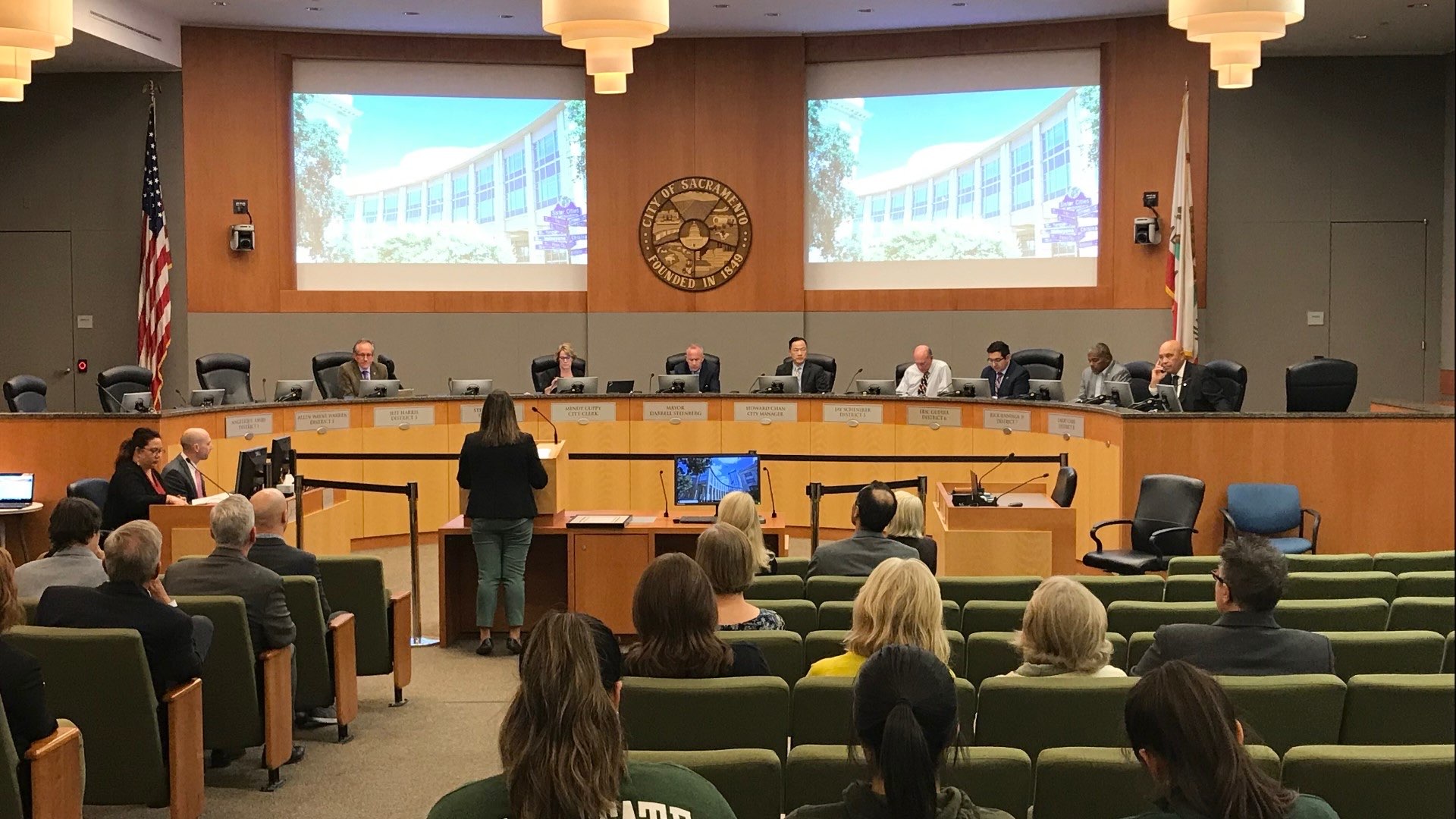
Your departments want what AI can do. Your residents do not want what a data center does.
The permit counter, the records office and the eligibility caseworkers all have work that AI can help carry. What fills the chamber is not the capability. It is the acreage, the water, the new power line, the tax break, and a facility somebody else owns.
The question is not whether AI comes to your county. It is on whose terms, in whose building, and on whose balance sheet.
That is what we built.
AI, without the data center.
Allodial Furnace is the hardware and the software to run open-weight AI models inside a building your government already owns. Your records never leave it.
A sealed AI cabinet the size of a commercial boiler, in a building you already own, on your own balance sheet.
Five facts
01
Not one acre.It goes in a plant room you already have.
02
No water consumed.The cooling loop is sealed.
03
No new power line.It sits behind a meter you already have.
04
No tax break asked for.No abatement, no tax increment financing, no incentive of any kind.
05
One budget vote.Bought the way your government already buys a boiler or a fire truck, not approved at a rezoning hearing.
Every one of those fights is about a facility somebody else owns, on land somebody else rezoned, drawing power somebody else's ratepayers pay to deliver. The opposition is bipartisan, it is rising, and it is not going to reverse before your next budget cycle.
None of it is an argument against the capability. It is an argument about ownership, process, and who carries the cost. Furnace is what a county buys when it wants the first thing without the second.
Sources
Annenberg Public Policy Center, University of Pennsylvania. 1,320 U.S. adults, fielded June 16 – July 19, 2026, ±3.5 points.↩
U.S. Infrastructure Moratorium Tracker, as of August 19, 2026. Built from roughly 4,600 primary ordinances and board minutes; published open data.↩
Morgan Stanley Research, note led by strategist Michelle Weaver, August 17, 2026; quoted in Fortune, August 20, 2026.↩
02
How is this different from a data center?
One of these requires something from your community. The other requires a plant room.
Measure
A hyperscale facility
An Allodial Furnace
Asks your community for
Rezoning, a tax abatement, and a hearing
A budget vote
Land
Tens to hundreds of acres
Not one acre
Water
Millions of gallons a year
None. The loop is sealed.
New electrical infrastructure
Substation, transmission, interconnection queue
None. It sits behind a meter you already have.
Who owns it
A developer, often through a shell entity
Your government, outright
How it is approved
Rezoning, conditional use, public hearing, litigation
A line in the capital budget
Construction
Months to years
Delivery and commissioning, measured in days
Turning it off
Governed by a private power contract you are not a party to
You hold the switch
If it disappoints
The abatement is already granted
You own a machine and can redeploy it
There is no applicant, no rezoning, no developer, no shell company, and no undisclosed end user — because nobody is asking your community to approve anything. The only decision is whether to buy a piece of equipment, made the way your government already buys a fire truck or a boiler.
03
What can we promise residents before anyone asks?
Voters do not want this industry stopped so much as they want it bound.
A Republican polling firm testing a governor's guardrails package found 82% support for guardrails, and support for a nearby facility rising from 46% to 55% once guardrails were paired with concrete benefits. Their conclusion was that whoever owns enforceable protections owns this issue.
So here are nine. They are not claims about what the equipment does. They are commitments an elected official can make in public, in writing, and take a vote on the same night.
01No tax abatement, no tax increment financing, no incentive of any kind.
02No non-disclosure agreement with any public body, and that refusal in writing.
03Publish the numbers before anyone asks — kilowatts, water, decibels at the property line, generator hours — in the agenda packet at first reading.
04The government owns the equipment outright. Not leased, not hosted, not a private facility on public land.
05Name the workloads, and fence off the ones the public has already rejected. Eligibility determination and enforcement go on the excluded list unless a human makes every final call.
06The equipment is curtailable, and the government holds the switch.
07No new generation, no new transmission, no land, no water consumed on site.
08Agree with your workforce before you announce, not after.
09Publish the results, including the ones that disappoint. Set the measures before deployment and report quarterly whether they move or not.
“I'm not asking you to trust the technology. I'm telling you the nine things I've already put in writing, and I'll take a vote on any one of them tonight.”
04
What does it actually do?
Sold as named work against a named statute. Never as "AI for the county."
We do not sell a general assistant and hope a department finds a use for it. Each module does one defined job, applies written rules, cites the clause it applied, and refuses anything outside the domain it was built for. What it cannot determine, it hands to a person, with the reason.
Permit and zoning screening
Checks a submission against your adopted code sections and returns a citation for every point checked. Sold as screening, not approval, over a defined subset — residential, accessory dwelling units, tenant improvements. Everything outside that subset is refused to a human.
Benefits eligibility preparation
Follows the federal rule set from cited record fields and assembles the determination with its citations. The caseworker decides. The machine prepares and cites; it does not approve or deny.
Fee, tax and utility billing
Exact arithmetic over the rate schedule adopted and in force on the service date, with every tier boundary, proration and exemption applied as published.
Records request triage and redaction
Every withheld element maps to a named statutory exemption with a citation, the response clock is tracked against your state's deadline, and the disclosure log is complete and tamper-evident.
What is deliberately not available
Police narrative drafting. Open-ended advice to constituents. Risk scoring of individuals. HR screening. These are excluded by design and are not buildable without a documented override.
Americans accept AI for repetitive administrative work and reject it for high-stakes decisions about people. That finding happens to match the engineering: those are exactly the tasks where the rule cannot be written down precisely enough to be checked. We would rather name what the system will never touch than discover the limit in public.
Three sizes
Named in rated kilowatts, because that is how a boiler is sold — and because computing heat is produced at a coefficient of performance of one, so a single number is the electrical draw, the thermal output, and a fair proxy for capacity.
We can administer the machine. We cannot read what is on it.
Most vendors handle this with a policy document. We handle it with architecture, because a policy is a promise and architecture is a property.
The machine is split in two. The data plane holds your records, your model, your keys and your audit log, inside an encrypted enclave. The management plane is what we touch: firmware, patches, health telemetry, signed software updates. We cannot decrypt the data plane, because we do not hold the key and the hardware will not hand plaintext to anyone who does not.
Allodial can
Allodial cannot
Patch the host operating system, firmware and management controller
Read data-plane memory, disk or accelerator memory
Deliver a signed model, rule-set or software update
Alter the audit log, which is append-only on a credential we do not hold
Request emergency access
Obtain emergency access without your approval, a time limit, and a session recording delivered to your log
Why this is not optional for us
Criminal justice information rules reach people, not only data. Anyone with direct or indirect access needs fingerprint-based state and national background checks, and vendor engineers are not vetted. That rule disqualifies a hosted AI service on personnel grounds — and it would disqualify us too, if one of our engineers could reach your records during a support call.
So administering without reading is not an aspiration we designed toward. It is the condition of being allowed to sell to you at all, which is why it is enforced by hardware rather than asserted in a support policy.
Three more facts, briefly
It runs with the network unplugged, including updates. Weights ship on the machine; there is no license server, no activation, and no phone-home.
Several departments can share one machine without their work mixing, with separation enforced on five axes at once.
Your audit log lives in your database, exports in full, and records the model, the configuration, the rule-set version, the citations and the outcome for every determination.
The number you put in the October budget is the number you pay in June.
Municipal budgets are annual, voted, and inflexible. A department cannot come back to the commission in March because officers used the assistant more than forecast. That is not a preference; it is how the institution works.
Metered AI services bill by use. The organizations that adopted them at scale learned what that means — one large technology company burned an entire annual AI budget in four months and imposed a hard per-employee cap; another moved its whole workforce off consumption billing specifically to get cost certainty. Neither had a price problem. Both had a predictability problem, and a county has far less room to absorb one.
A Furnace converts that into a capital asset with a known cost. Three lines, and there is not a fourth:
The purchase. One approval, one asset, depreciating on a schedule your finance office already uses for plant.
Electricity, on a bill you already receive, at a rate you already know, for a load you can read on a meter.
A support and update agreement, quoted annually before you sign.
No per-query charge, no seat count, no token meter, no surprise at renewal, and no license server that can switch the machine off if a payment is late. Stop paying for support and you keep a working machine running the last version you received.
Why not just use the cloud
Cloud AI is a subscription to someone else's machine, metered by use, with your records in transit. Furnace is a machine you own, budgeted once, with your records never leaving the building. Both are legitimate. Only one survives a public records request and a flat budget year.
We do not sell this as cheaper per query than a cloud subscription. We sell it because the number is knowable in advance and the records stay where you can see them.
The capital question worth asking your finance officer
A purchased machine and a subscription are accounted for differently, and the difference often decides whether a project can be funded at all. A cabinet is tangible personal property: installment-financeable, bondable, or bought outright from a capital line. A subscription is a service contract and generally is not. Confirm the treatment with your own finance officer and counsel — we will supply the documentation they ask for.
07
Where do the power and the heat go?
The same kilowatt does the computation and the hot water.
A sealed cabinet cannot do anything with electricity except turn it into work and then into heat. All of it ends up as heat inside your building — and 63 to 77% of it is captured into your water loop at a useful temperature, with the balance warming the plant room. In a jail, a hospital, a rec center, a school or any building with year-round hot water demand, that is a line on the gas bill that gets smaller.
Water consumed: zero. The loop is sealed. Nothing evaporates, nothing is drawn from the mains, nothing returns warm to a creek. Air-cooled computing uses roughly half a gallon per kilowatt-hour. This uses none, at any outdoor temperature.
The grid
It sits behind an existing electrical service, below the large-load thresholds that trigger an interconnection study. No queue, no rate case, no cost shifted to households.
And it can be turned down. When the utility asks, or when your own emergency plan says so, the machine reduces its draw within minutes — and because you own it, nobody's permission is required. The control logic that does this is proven to hold the facility inside its power envelope under every possible sequence of work requests, to never shed work it could have placed, and to protect workloads that must not be interrupted, which for a government machine means the compliance and audit work.
That same capability is why there is no new diesel generator: it uses the building's existing backup provision, or it stands down cleanly.
The honest boundary
Against electric resistance heating, the displacement is close to one for one. Against gas it depends on your local price spread, and we will run that with your numbers rather than ours. Against a modern heat pump the heat is supplemental and the compute has to carry the case on its own. We put the kilowatt rating in the product name precisely so that comparison gets made — and if it does not favor us at your site, we would rather you know before the capital vote.
Run it with your numbers
Heat you can use, a year
$835–$1,694of heat a year, against $6,517 of electricity — an offset of 13–26%
Assumes a Furnace 7kW running 18 hours a day, a building that wants heat on somewhere between 180 and 365 days a year, and the published design capture fraction. The range is the days your building can use the heat; everything else is your figure.
Electricity the machine draws
46,548 kWh
Heat your building can use
17,458–35,402 kWh
Net energy cost of running it
$4,823–$5,681 a year
Gas not burned
726–1,473 therms
Water consumed
0 gallons
Against gas it depends on your local price spread, and we will run that with your numbers rather than ours.
Why this number
A Furnace 7kW draws 7,085 W at the branch circuit, from the published power chain.
At 18 hours a day for 365 days that is 46,548 kWh a year, which costs $6,517 at $0.14 per kWh.
76% of its rated 7.09 kW is captured into the water loop by design: 35,402 kWh a year. The other 11,180 kWh warms the plant room and is not counted.
A building that wants heat 365 days a year can use 35,402 kWh of it; one that wants heat 180 days a year can use 17,458 kWh.
A boiler at 82% efficiency would have burned 726–1,473 therms to deliver that heat, at $1.15 a therm: $835–$1,694.
That is 13–26% of the electricity the machine draws. Running more or fewer hours changes the dollars but not that share, because every figure scales with the hours.
Water consumed, at any outdoor temperature: 0 gallons.
We do not certify that any AI model is free of hidden defects.
Nobody can. Research has established that a model can be tampered with in ways that are computationally infeasible to detect even with full access to every weight, and that such tampering survives ordinary retraining. A vendor who tells you their model is certified clean is describing something that does not exist.
Our position is the opposite. We do not ask you to trust the model. We build the system in which the model does not have to be trusted: it proposes, a rule engine decides, every decision cites the clause it applied, and anything outside the defined domain is refused to a human.
We do not claim it pays for itself.
It offsets a meaningful share of cost through a displaced subscription, recovered heat, and grid flexibility. Each of those is defensible. Together they are an offset, not a payback, and we will show you the sensitivity rather than a point estimate.
Our warranty is narrow and factual:the checks ran, the policy was enforced, the hashes match, the log is complete. Every one of those either happened or it did not.
Narrow claims are the only kind that survive contact with an incident.
09
How do we start?
The first cohort of three counties is being selected now.
A capital vote is a terrible first ask. A pilot is a good one. It is small, it is reversible, it produces the operating data that makes the next conversation concrete, and it puts your county in the first cohort rather than the fortieth.
Nobody is running one yet. That is the honest answer to "who else has this" — and the first three counties set the reference every county after them will ask about.
01
A short note from you.Jurisdiction, building type, and which of the four workloads. A person reads it and replies.
02
Scoping call.We will tell you at this stage if we think the answer is no.
03
Site assessment.Electrical service, plant room, and what your building does with heat year-round.
04
Specification pack.A written configuration, every cost line sourced and dated, the estimated lines marked as estimated, the upgrade and residual position stated.
05
Security and records review.Your security function, your records officer, your counsel, working from the architecture. We expect this to be adversarial and would rather it happened now.
06
Public reading and capital vote.Specification and numbers in the agenda packet at first reading, per commitment three.
07
Delivery and commissioning.Days, not quarters, tested against acceptance gates we publish in advance.
Until the application form is live
Write to us with your jurisdiction, building type, and which of the four workloads. A person reads it and replies within a week.